Ragdoll Cat: Colours, Types, Blue Eyes, Size and Personality
In this article
- Ragdoll cat facts at a glance
- What is a Ragdoll cat?
- Brief history of the Ragdoll breed
- Types of Ragdoll cats: colours and patterns
- Ragdoll eye colour: do all Ragdolls have blue eyes?
- Ragdoll personality and temperament
- Ragdoll size and weight
- Ragdoll lifespan
- Ragdoll health
- Grooming a Ragdoll
- Feeding a Ragdoll
- Exercise and play
- Can Ragdolls go outside?
- Ragdoll vs Ragamuffin
- Ragdoll kittens: what to expect
- Buying or adopting a Ragdoll in the UK
- Frequently asked questions
The Ragdoll cat is a large, semi-longhaired pointed breed that always has blue eyes, a silky coat and a famously calm, people-loving temperament. Every pedigree Ragdoll is a pointed cat in one of six colours (seal, blue, chocolate, lilac, red or cream), shown in three main patterns: colourpoint, mitted and bicolour. They are slow to mature, usually live 12 to 17 years, and the one health check to ask every breeder about is the DNA test for the breed's heart disease gene.
In short
- Temperament: gentle, relaxed and sociable. The famous "going limp" is far from universal.
- Look: a large, semi-longhaired pointed cat in six colours (seal, blue, chocolate, lilac, red and cream) and three patterns: colourpoint, mitted and bicolour.
- Eyes: always blue in a pedigree Ragdoll. Any other eye colour is a fault in every major standard.
- Size: males up to about 9 kg according to the breed standard, but the typical UK Ragdoll weighs around 4.5 kg. Fully grown at three to four years.
- Lifespan: 12 to 17 years according to the GCCF.
- Main health point: a breed-specific gene for hypertrophic cardiomyopathy (HCM). Ask for the parents' DNA test results.
Ragdoll cat facts at a glance
The figures below come from the breed standards of the GCCF (the main UK registry) and the American CFA, and from the Royal Veterinary College's VetCompass study of more than 21,000 Ragdolls under UK vet care. Breed standards describe the ideal show cat. The vet records show what real pet Ragdolls weigh and what they most often see the vet for.
| Fact | Ragdoll | Source |
|---|---|---|
| Origin | Riverside, California, in the 1960s, bred by Ann Baker | GCCF |
| In the UK | Since 1981, recognised by the GCCF in 1990 | GCCF |
| Colours | Seal, blue, chocolate, lilac, red and cream points, each also as lynx (tabby) or tortie | GCCF standard |
| Patterns | Colourpoint, mitted and bicolour. The CFA also recognises van | GCCF, CFA |
| Eyes | Always blue | GCCF, CFA |
| Weight in the breed standard | Males 12 to 20 lb (5.4 to 9 kg), females 8 to 15 lb (3.6 to 6.8 kg) | GCCF |
| Typical weight in UK vet records | Median 4.46 kg: males 4.97 kg, females 3.83 kg | VetCompass (O'Neill et al., 2025) |
| Fully grown | At three to four years | GCCF |
| Lifespan | 12 to 17 years, around 15 on average | GCCF |
| Median age at death in UK vet records | 12.85 years | VetCompass (O'Neill et al., 2025) |
| Coat care | Silky semi-long coat that mats if neglected. Brush at least once a week | GCCF |
| Health tests to ask the breeder for | DNA test for the Ragdoll HCM gene (required for GCCF breeding cats since 2016), plus PKD | GCCF, Purina UK |
| Most common problems in UK vet records | Dental (periodontal) disease 8.8%, diarrhoea 7.1%, obesity 6.9% | VetCompass (O'Neill et al., 2025) |

What is a Ragdoll cat?
A Ragdoll is a pedigree breed, built big and solid, with a long body, a broad chest, sturdy legs and a long bushy tail. The coat is silky, dense and medium in length, with a ruff around the neck and "knickerbockers" on the back legs in mature cats. The GCCF standard describes the ideal Ragdoll as large, powerful and moderate, with no extreme features, and says the cat should be relaxed, gentle and easy to handle.
Are Ragdolls hypoallergenic? No. They shed and they produce the same main cat allergen as other cats. Read more in which cats are hypoallergenic.
The name comes from the reported habit of the first cats to go floppy and relaxed when picked up, like a rag doll. More on how true that still is under personality.
The breed is hugely popular. The Cat Fanciers' Association (CFA) named the Ragdoll its most popular breed for 2023, and in the CFA rankings for 2025 and 2026 it is second, just behind the Maine Coon. In the UK, a large Royal Veterinary College study found it was the second most common pedigree cat under vet care in 2019. Among the cats in that study, Ragdolls made up 0.7% of those born in 2005 and 3.7% of those born in 2019.
Brief history of the Ragdoll breed
The Ragdoll was developed in the 1960s by Ann Baker, a breeder in Riverside, California. All the foundation cats descend from Josephine, a white domestic longhair female. According to the GCCF, Baker took on Josephine's son Daddy Warbucks, a seal mitted male with a white blaze, plus two of her daughters: Buckwheat, a black cat, and Fugianna, a seal bicolour. The first registered Ragdolls were born in 1965 from a mating between Buckwheat and Daddy Warbucks.
Baker trademarked the name Ragdoll and started her own registry, the International Ragdoll Cat Association (IRCA), with strict rules about who could breed and register the cats. In the mid-1970s a breakaway group led by Denny and Laura Dayton wrote the standard that the big registries use today. Another group of breeders who left Baker's registry later developed the closely related Ragamuffin.
Ragdolls came to the UK in 1981 and the GCCF recognised the breed nine years later. The CFA accepted Ragdolls for registration in 1993 and gave them championship status in 2000. TICA and FIFe recognise the breed as well.
Types of Ragdoll cats: colours and patterns
When people search for "types of Ragdoll cats" they usually mean the different looks. A Ragdoll's look is the combination of three things: the colour of the points, the pattern of white, and any tabby (lynx) or tortie variation on top.
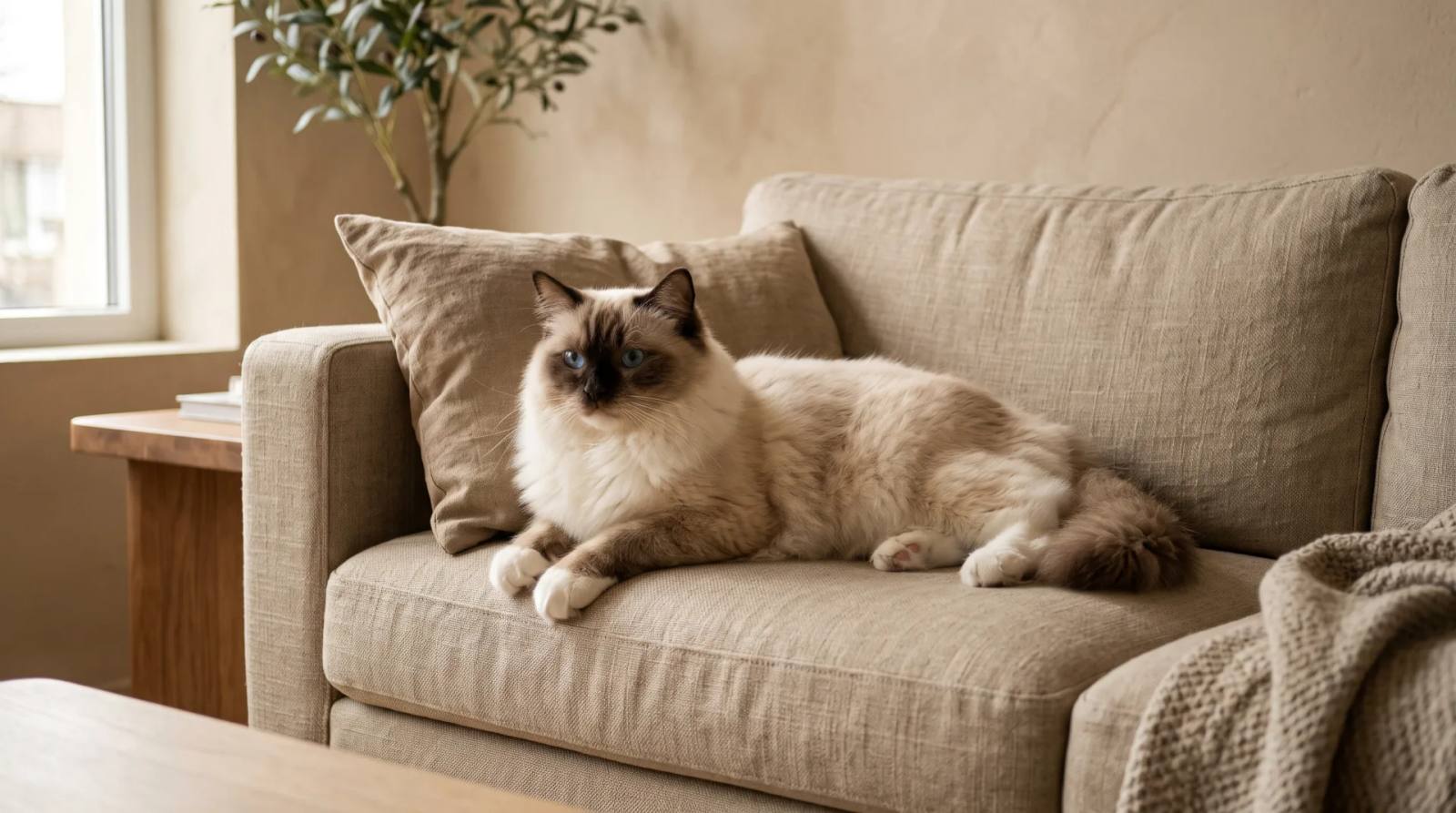
All Ragdolls carry the colourpoint gene, the same one that gives Siamese cats their look. The body stays lighter and the colour concentrates on the cooler parts: the face (mask), ears, legs and tail. Ragdoll kittens are born white. The point colour starts to appear within days and keeps developing, and full colour and coat can take two to three years.
The six Ragdoll colours
The GCCF, CFA and TICA all work with the same six point colours. Three are full colours and three are their paler, "dilute" versions.
| Colour | Points | Body | Dilute of |
|---|---|---|---|
| Seal | Deep seal brown (not black) | Beige | Full colour |
| Blue | Greyish blue | Bluish white | Seal |
| Chocolate | Milk chocolate | Ivory | Full colour |
| Lilac | Pinkish grey | Magnolia | Chocolate |
| Red (flame) | Red | Pale cream | Full colour |
| Cream | Cream | Off-white | Red |
Seal point is the colour most people picture. Blue point Ragdolls are the classic "grey and white" Ragdoll. Red and cream points often show faint tabby barring and freckles on the nose and ears, and the GCCF standard says that should not be penalised.
Brown, grey or white Ragdoll? The official names
Most people describe a Ragdoll by what they see. Breeders and registries use the point colour and pattern. This is how the everyday words translate.
| You may hear | Usually means |
|---|---|
| Brown Ragdoll with blue eyes | Seal point (deep brown points on a beige body) |
| Grey Ragdoll | Blue point, or the paler lilac point |
| Ginger or orange Ragdoll | Red (flame) point |
| White Ragdoll | A young kitten, a pale cream or lilac point, or a bicolour or van with a lot of white |
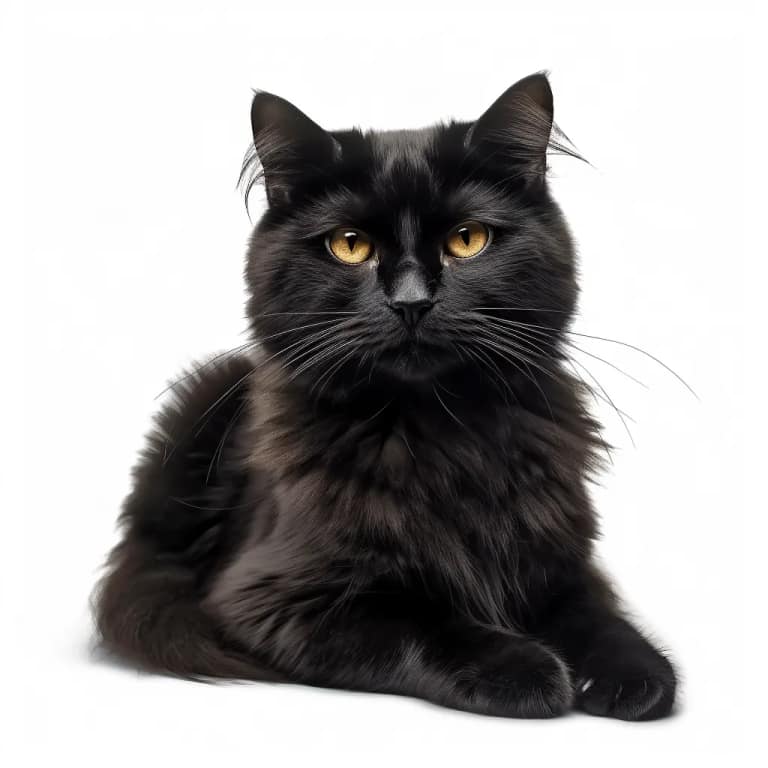
| Black Ragdoll | A very dark seal point, a cross, or a sepia from mink lines. No recognised black Ragdoll exists |
| Ragdoll with white paws | Mitted (white mittens and chin) or bicolour (white legs and an inverted V on the face) |
| Striped or tabby Ragdoll | Lynx point in any colour |
There is no solid white Ragdoll. Ragdoll kittens are born white and their points appear over the first weeks, so a "white Ragdoll" for sale is either a kitten whose colour has yet to show or a cat with very pale points.
The Ragdoll patterns
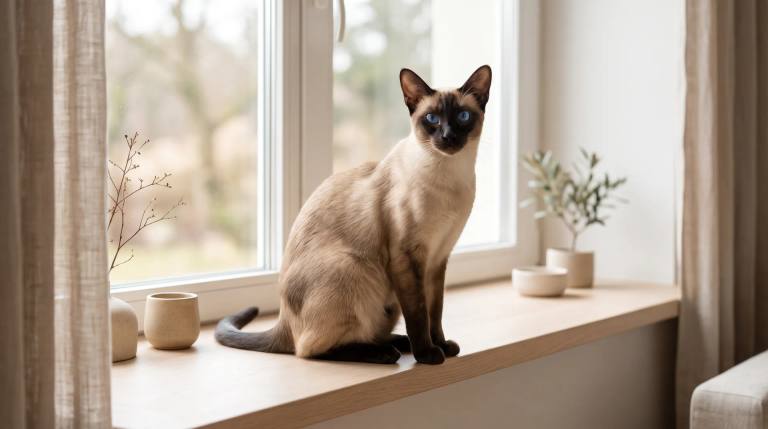
- Colourpoint: no white at all. Darker mask, ears, legs and tail on a lighter body, with dark paw pads and nose leather. In the GCCF standard any white on a colourpointed Ragdoll is a fault.
- Mitted: the points of a colourpoint, plus white "mittens" on the front paws, white back legs up to at least the hock, a white chin and a white stripe running from the chest along the belly to the tail. A narrow white blaze on the nose is allowed. A mitted Ragdoll without a white chin is a fault.
- Bicolour: a white inverted V on the face covering the nose, whisker pads and chin, plus white legs, a white chest and a white belly. The ears, mask and tail stay coloured. Some white patches on the back are allowed, up to about a third of the back and sides.
- Van: recognised by the CFA. Mostly white, with colour only on the ears, mask and tail.
You may also see breeders talk about "high mitted" or "mid-high white". These are informal terms for cats with more white than the standard allows for their pattern. They make lovely pets but sit outside the show standards.
Lynx and tortie Ragdolls
Lynx is the Ragdoll world's name for tabby point. A lynx Ragdoll has a clear "M" on the forehead, light "spectacles" around the eyes, striped legs and a ringed tail. Tortie points mix seal or chocolate with red, or blue or lilac with cream. A tortie with tabby markings is a tortie tabby, often called a torbie. Because the tortie pattern is linked to the X chromosome, tortie Ragdolls are nearly always female.
Lynx and tortie are variations, so they come in each pattern. A seal lynx mitted, a blue tortie bicolour and a chocolate colourpoint are all Ragdolls. Counting every combination in the GCCF standard gives 20 colour varieties in each of the three patterns, so 60 types of Ragdoll in total.
Is there a black Ragdoll cat?
No. A black Ragdoll is not a recognised colour. The GCCF, CFA and TICA only accept pointed Ragdolls, and the GCCF standard even specifies that seal points must be "deep seal brown, not black". A very dark seal point can look almost black in photos, especially in winter or as the cat ages, but the body is still lighter than the points.
What about the "black Ragdoll with blue eyes" you see online? It is usually a dark seal point photographed in low light. A seal sepia from mink lines can also look nearly black, but its eyes are green to gold and it does not count as a Ragdoll in the GCCF or CFA (see the eye colour section below).
The foundation lines did include a black cat (Buckwheat), so solid colours were around at the start of the breed. Today a black cat sold as a Ragdoll is either a cross with another breed or a cat from lines bred outside the recognised standard. It can still be a lovely, gentle pet, but it cannot be registered or shown as a Ragdoll with the main registries, and you should not pay a pedigree price for it. If you are curious which breeds do come in solid black, see our article on what breed black cats are.
Ragdoll eye colour: do all Ragdolls have blue eyes?
Yes, every pedigree Ragdoll has blue eyes. The GCCF standard asks for eyes that are "definitely blue in colour" and withholds awards for any other eye colour. In the CFA standard any eye colour other than blue is a disqualification.
Why do Ragdoll cats have blue eyes?
The reason is the colourpoint gene. It reduces pigment in the cooler parts of the body and also limits pigment in the iris, which is why Siamese cats, Birmans and Ragdolls all have blue eyes. A Ragdoll needs two copies of the gene, one from each parent. Its eyes stay blue for life, and they do not turn green or gold as the cat grows up.
Shades of blue
The shade of blue varies from cat to cat, from a light sapphire to a deep blue. The GCCF breed profile asks for a deep blue, and the CFA standard penalises eyes that are very pale or so dark they look black. The eyes themselves are large, slightly oblique and set well apart. Odd eyes, one blue and one of another colour, fall outside both standards, which ask for blue eyes.
Ragdoll kittens' eyes
Kittens open their eyes at around one to two weeks old, and every kitten starts out with blue eyes, whatever its breed. In most cats the adult colour comes through between about six weeks and three months. In a Ragdoll the eyes simply stay blue. That has a practical side for buyers: the GCCF advises that a kitten should not leave its breeder before 13 weeks, so by the time you collect it you can already see whether the eyes are a true blue.
Ragdoll-type cats with aqua, green or gold eyes
Some breeders also sell "mink", "sepia" and "solid" Ragdolls. Breeders trace them to Ragdoll lines into which a Burmese colour gene was brought. One copy of that gene plus one colourpoint gene gives a mink, with a darker body and aqua or blue-green eyes. Two copies give a sepia, with eyes from green to golden yellow. A solid cat has no points at all and has green or yellow eyes.
The GCCF and CFA do not accept these cats as Ragdolls, because their standards ask for a pointed cat with blue eyes. Some registries now register them as a separate breed called the Cherubim. If you want a Ragdoll that can be registered and shown as one, choose a traditional pointed kitten with blue eyes and check the registration papers.
So what if a cat sold as a Ragdoll has green or gold eyes and no mink or sepia background? Then it does not carry two copies of the colourpoint gene, so it is not a pure Ragdoll. It can be a Ragdoll cross or a Ragdoll-looking cat, which makes no difference to how good a pet it is, but it should not cost a pedigree price.
Can a Ragdoll's eye colour change as an adult?
No, not in a healthy eye. An eye that changes colour, turns cloudy or red, or that your cat keeps half closed needs a vet check. The MSD Veterinary Manual advises seeing a vet for squinting, red or bloodshot eyes, or any other change to the eye.
Ragdoll personality and temperament
Ragdolls are known for being gentle, relaxed and sociable. Many follow their people from room to room, greet visitors and enjoy lap time without being demanding. The CFA describes them as loving without being demanding, and the GCCF breed profile says they generally love interaction with people and other animals. That calm nature makes them a popular choice for families. If you are weighing up breeds, our guide to the best cat breeds for kids compares the Ragdoll with other family cats.
They are still cats with a playful side. Most Ragdolls love wand toys and chasing games, and some learn to fetch small toys. Each cat is an individual, and how a kitten was raised matters at least as much as its breed.
Ragdolls are quiet cats. The CFA says they are not talkative and may greet you with a soft mew now and then. The CFA also describes them as cats that greet you at the door and stay close to your side. If everyone is out at work all day, plan daily play when you are home, or consider a bonded pair that keeps each other company. The CFA adds that they get on well with other animals, but should be introduced to an existing cat or dog with extra care.
Do Ragdolls really go limp when you pick them up?
Some do, many do not. The "floppy" story goes back to Ann Baker's claims about her first cats. The CFA notes that going limp when held is not typical of most of today's Ragdolls. The GCCF breed profile is even more direct: it calls the floppiness that gave the breed its name "pure hype".
There is a more serious myth attached to it, that Ragdolls feel less pain. That is false, and the GCCF warns that believing it is dangerous. A Ragdoll feels pain like any other cat and tends to hide it like any other cat. Watch for quieter signs such as hiding, a changed posture, eating less or not wanting to be touched in one spot, and see your vet if something seems off.
Ragdoll size and weight
Ragdolls are among the larger cat breeds and they take their time: the GCCF says full maturity can take up to four years. For how growth works in general, see when cats stop growing. Breed clubs give these ranges for neutered adults:
- Males: 12 to 20 lb (about 5.4 to 9 kg). The GCCF adds that fully developed males often weigh upwards of 6 kg.
- Females: 8 to 15 lb (about 3.6 to 6.8 kg), often between 4 and 6 kg.
Real-world weights are lower than many breed pages suggest. In the Royal Veterinary College's VetCompass study of over 21,000 UK Ragdolls, the median adult weighed 4.46 kg: 4.97 kg for males and 3.83 kg for females. A healthy Ragdoll looks big partly because of its long body and its coat. Judge your cat by body condition: you should be able to feel the ribs under a thin layer of fat.
Ragdolls are long and heavy, but most Maine Coons are taller and longer still. Our Maine Coon guide covers the other gentle giant.
A big cat needs a big litter tray. International Cat Care advises a tray about one and a half times the length of your cat, big enough to turn around in, so a grown Ragdoll male usually needs a jumbo tray or a large storage box. Which litter works best in it is covered in our guide to the best cat litter.
Thinking about a self-cleaning tray? Check the maximum cat weight first, because not every model is roomy enough for a large breed. Our comparison of the best automatic cat litter boxes includes picks for large cats.
Ragdoll lifespan
The GCCF gives a lifespan of 12 to 17 years and a life expectancy of around 15 years. Large UK studies of vet records come out a little lower. The VetCompass study found a median age at death of 12.85 years for UK Ragdolls, most often from kidney disease or a poor quality of life in old age. That is just over a year shorter than for UK cats overall, but typical for pedigree cats in general, so the researchers put the difference down to being a pedigree cat.
A 2024 study of life tables for UK cats estimated 10.3 years from birth for Ragdolls, against 11.7 years for all cats. That figure rests on only 69 Ragdolls, so the true value could lie anywhere between about 9 and 12 years. The same 2024 study found that neutered cats lived about a year longer than unneutered cats, and that cats whose adult weight was far from the usual weight for their breed and sex lived shorter lives. Both are things you can influence. Our article on how long cats live explains what else helps cats reach old age.
Ragdoll health
Ragdolls are a generally healthy breed, but there are a few things every owner and buyer should know. For an overview of common illnesses and their symptoms in all cats, see our guide to cat diseases.
When to see a vet
- Straight away: fast or laboured breathing at rest, breathing with the mouth open, suddenly not using the back legs or crying out in pain. These can be signs of heart disease or a blood clot. A male cat straining in the litter tray and passing little or no urine is also an emergency, even at night.
- Within a few days: eating less, losing weight, drinking or urinating more than usual, bad breath, diarrhoea that keeps coming back, or a heart murmur found at a routine check.
Hypertrophic cardiomyopathy (HCM)
HCM is a disease in which the heart muscle thickens, so the heart pumps less well. It is the most common heart disease in cats, and Ragdolls have their own known gene variant for it, called MYBPC3 R820W, first described in 2007.
- How common is the gene? In a study of 2,018 Ragdolls tested in the British Isles, 27% carried the variant: 25.6% had one copy and 1.4% had two. Those samples date from before testing became compulsory for GCCF breeding cats.
- What does it mean? A UK survey of 236 tested Ragdolls found that cats with two copies had a median survival of 5.65 years and were much more likely to die of heart disease. Cats with one copy lived as long as cats without the variant in that study.
- What breeders do: since 24 February 2016, every Ragdoll registered with the GCCF for breeding must be tested for the gene.
A clear DNA test is good news, but it is not a guarantee. HCM also occurs in cats without this variant, including crossbreeds. Heart scans (echocardiograms) by a vet cardiologist can pick up HCM that a gene test cannot. Ask the breeder for the parents' test results, and ask your vet whether your cat would benefit from a heart check, especially if it has a heart murmur.
Other health points
- Teeth: gum disease was the most common problem in the VetCompass study, found in 8.84% of Ragdolls in a single year. Regular dental checks pay off.
- Digestion: diarrhoea came second (7.11%). Research suggests Ragdolls may more often carry feline coronavirus, a common virus that usually causes no or only mild gut symptoms. In rare cases it leads to feline infectious peritonitis (FIP), which used to be almost always fatal. UK vets can now prescribe legally sourced antiviral treatment: in a study of 307 treated cats, 84.4% were alive at the last follow-up. Ask your vet. If soft stools keep coming back once your vet has checked your cat, our guide to food for sensitive stomachs can help.
- Weight: obesity was the third most common problem (6.91%), and males were more likely to be overweight. Our guide to healthy cat treats explains how many treats are fine.
- Urinary stones: the veterinary literature lists a predisposition to calcium oxalate, struvite and urate bladder stones in Ragdolls. Straining in the litter tray or producing little or no urine is an emergency, particularly in male cats. Go to a vet straight away, even at night.
- Kidneys: kidney disease was the most common cause of death in the VetCompass study. Purina lists polycystic kidney disease (PKD) for the breed, at a lower risk than in breeds that are prone to it, and a DNA test exists. Ask the breeder whether the parents were tested, and ask your vet about yearly blood and urine checks once your cat is older.
- Blood groups: the GCCF strongly recommends blood typing breeding cats, because a rare blood subgroup occurs in the breed. This matters for breeders, and for you if your cat ever needs a transfusion.
Grooming a Ragdoll
A Ragdoll's silky coat needs regular care, because it mats if you leave it, especially behind the ears, under the front legs, in the armpits and on the "trousers". For a Ragdoll, a metal comb with wide and fine teeth does more than a brush, and our guide to the best brush for long-haired cats explains which comb and slicker to use, how to work through the coat in layers and how to remove a mat safely. The VetCompass study recorded coat problems such as matting in 4% of Ragdolls.
- Brush or comb at least once or twice a week. Use a wide-toothed metal comb to find tangles, then a soft slicker brush.
- Brush daily during moulting, usually in spring and autumn.
- Never pull at a mat. Work it loose from the edge with your fingers and comb, or ask a groomer or your vet to clip it out.
- Check the claws every few weeks. Overgrown nails were the fourth most common problem in UK Ragdolls (5.68%), especially in older, less active cats.
Our guide to trimming your cat's nails shows how to do the claws calmly at home.
Feeding a Ragdoll
A Ragdoll needs a complete food suited to its life stage, like any cat. A Ragdoll kitten gets a complete kitten food until it is about a year old, then moves to adult food. The breed keeps filling out for a few more years, but that does not call for extra food. Portion control matters most: Ragdolls are relaxed cats, the CFA notes they love their food, and obesity is common in the breed.
- Feed measured portions based on your cat's ideal weight, and adjust if you can no longer feel the ribs easily.
- Keep treats to a small part of the daily intake.
- Change food gradually over about a week.
- If your Ragdoll often has soft stools, see your vet first.
Exercise and play
Because they are so laid-back, Ragdolls can become couch potatoes. Two or three short play sessions a day with a wand toy or a ball keep them fit and help prevent weight gain.
A sturdy cat tree, scratching posts and puzzle feeders add exercise and mental stimulation.
Can Ragdolls go outside?
They can, but many live happily indoors and many breeders advise keeping them in or giving them a secure garden. There is no breed rule. Cats Protection says a cat can live a perfectly happy life indoors, as long as it can climb, scratch, play and hide, and warns that indoor life makes weight gain more likely. For a breed that already tends to put on weight, that makes daily play even more important.
If your Ragdoll does go out, make sure it is neutered and microchipped, and wait until it knows its new home. Our tips for keeping cats in the garden explain how to make a garden safer.
A microchip cat flap lets your Ragdoll come and go while keeping neighbouring cats out. Cats that have always lived outdoors can find it hard to switch to indoor life as adults, so decide early which way you want to go.
Ragdoll vs Ragamuffin
The Ragamuffin is the Ragdoll's closest relative. It grew out of the same IRCA cats when a group of breeders left Baker's registry, and it looks similar in build and temperament. The big difference is colour: Ragamuffins come in almost every colour and pattern, including solid black and non-blue eyes, while Ragdolls are always pointed with blue eyes.
Ragdoll kittens: what to expect
A Ragdoll kitten looks very different from the adult it becomes. It is born white, the points start to show within days, and the full colour and coat can take two to three years. Its eyes stay blue throughout. The breed is also slow to mature and keeps filling out until it is three or four years old.
- Leaving home: at 13 weeks or older, fully vaccinated, according to the GCCF.
- Food: a complete kitten food until about a year old (see Feeding above).
- Litter tray: start with a low-sided tray a kitten can climb into, and move to a large tray as it grows. Our guide to cat litter for kittens covers which litter is safe for young cats.
- Handling: get the kitten used to brushing and claw checks early, while the coat is still short and the cat is small.
Buying or adopting a Ragdoll in the UK
We do not quote a price because we could not find a reliable, current UK figure, and prices vary widely between breeders. The GCCF's own advice is to call several breeders to get an idea of the going rate. What matters more is what that price includes. A good breeder will:
- Register the kitten with a recognised registry (GCCF or TICA in the UK) and give you the pedigree and registration papers.
- Show you the HCM DNA test results of both parents and give you copies.
- Only let the kitten go when it is at least 13 weeks old and has had its full course of vaccinations, at least seven days before.
- Tell you whether the kitten is microchipped. In England every pet cat must be microchipped by 20 weeks of age.
- Let you meet the kitten with its mother, and be happy to answer questions after you take it home.
Be wary of very cheap "Ragdoll" kittens, kittens offered at 8 weeks, sellers who will not show the parents or test results, and "rare" colours such as black. Adult Ragdolls also come up for rehoming through breed clubs and rescues. An adult cat's personality and health are already known, which can make it an easy choice.
Frequently asked questions
Do all Ragdolls have blue eyes?
Yes. A pedigree Ragdoll always has blue eyes, because all Ragdolls carry the colourpoint gene. The GCCF and CFA standards both treat any other eye colour as a serious fault. A Ragdoll-looking cat with green or gold eyes is a cross or a lookalike.
What colour eyes do Ragdoll cats have?
Blue, ranging from a lighter sapphire to a deep blue. The GCCF breed profile asks for a deep blue, and the CFA penalises eyes that are very pale or so dark they look black.
Why do Ragdoll cats have blue eyes?
Because every Ragdoll carries two copies of the colourpoint gene. It limits pigment in the cooler parts of the body and in the iris, the same reason Siamese and Birmans have blue eyes.
Do Ragdoll kittens' eyes change colour?
No. All kittens start with blue eyes, and in most cats the adult colour shows between about six weeks and three months. A pedigree Ragdoll keeps its blue eyes for life. If the eyes turn green or gold, the cat is a cross or from mink, sepia or solid lines.
Can a Ragdoll have green or aqua eyes?
Not a Ragdoll as the GCCF and CFA define it. Mink cats from Ragdoll lines have aqua or blue-green eyes, sepias have green to golden eyes. Some registries register these cats as a separate breed, the Cherubim.
Is there a white Ragdoll cat?
No solid white Ragdoll exists. Kittens are born white and colour in over the first weeks. An adult that looks white is a pale cream or lilac point, or a bicolour or van with a lot of white.
Is there such a thing as a black Ragdoll cat?
Not as a recognised Ragdoll. The GCCF, CFA and TICA only accept pointed cats, and seal points must be "deep seal brown, not black". A solid black cat sold as a Ragdoll is a cross or comes from lines outside the standard.
How many types of Ragdoll cats are there?
There are six colours (seal, blue, chocolate, lilac, red, cream) and three main patterns (colourpoint, mitted, bicolour), plus van in the CFA. Each can also be lynx, tortie or both. The GCCF standard describes 60 varieties in total.
Do Ragdoll cats really go limp?
Some do, but many do not. The CFA says it is not typical of most of today's Ragdolls, and the GCCF calls it hype. Ragdolls feel pain like any other cat, so never rely on the myth that they are pain resistant.
How big do Ragdoll cats get?
Breed clubs give 12 to 20 lb (5.4 to 9 kg) for males and 8 to 15 lb (3.6 to 6.8 kg) for females. In UK vet records the median adult weighs 4.46 kg. They can keep filling out until they are three or four years old.
How long do Ragdoll cats live?
Usually 12 to 17 years according to the GCCF. A large UK study of vet records found a median age at death of 12.85 years, typical for a pedigree cat and just over a year shorter than for cats overall.
Are Ragdoll cats good with children?
Generally yes. Their calm, gentle nature suits most families, as long as children learn to handle a large cat with care and the cat has places to retreat to.
Do Ragdolls shed a lot?
Moderately. They moult, especially in spring and autumn, and the coat mats if neglected. Weekly brushing and daily brushing during moulting keep it under control.
Are Ragdolls indoor cats?
They do not have to be, but many owners and breeders keep them indoors or give them a secure garden. An indoor Ragdoll needs places to climb and scratch and daily play, because indoor cats put on weight more easily.
Are Ragdoll cats quiet?
Yes, as a rule. The CFA describes them as not talkative, with a soft mew now and then. Individual cats differ, and any cat that suddenly becomes much more vocal should see a vet.
Can Ragdoll cats be left alone?
For a working day, yes, but they are people-oriented cats that like company. If you are out a lot, plan daily play when you are home or consider a bonded pair.
Sources for this guide
- Ragdoll (gccfcats.org)
- Choosing a kitten (gccfcats.org)
- Code of ethics (gccfcats.org)
- Ragdoll (cfa.org)
- Most popular breeds for 2023 (cfa.org)
- Indoor cats (cats.org.uk)
- Soiling indoors (icatcare.org)
- A urethral obstruction is an absolute emergency, requiring immediate veterinary treatment. (vet.cornell.edu)