Siamese Cats: The Royal Cat of Siam, Its History, Colours and Care
In this article
- Where do Siamese cats come from? A short history
- Why are Siamese cats darker on the face, ears, paws and tail?
- Siamese colours: seal, blue, chocolate and lilac
- What a Siamese looks like: body, size and type
- Traditional, classic and modern Siamese
- Siamese personality: what living with one is like
- Siamese cat habitat: indoors or outdoors?
- Caring for a Siamese
- Siamese cat health
- Buying a Siamese kitten in the UK
- Breeds related to the Siamese
- Famous Siamese cats
- Frequently asked questions
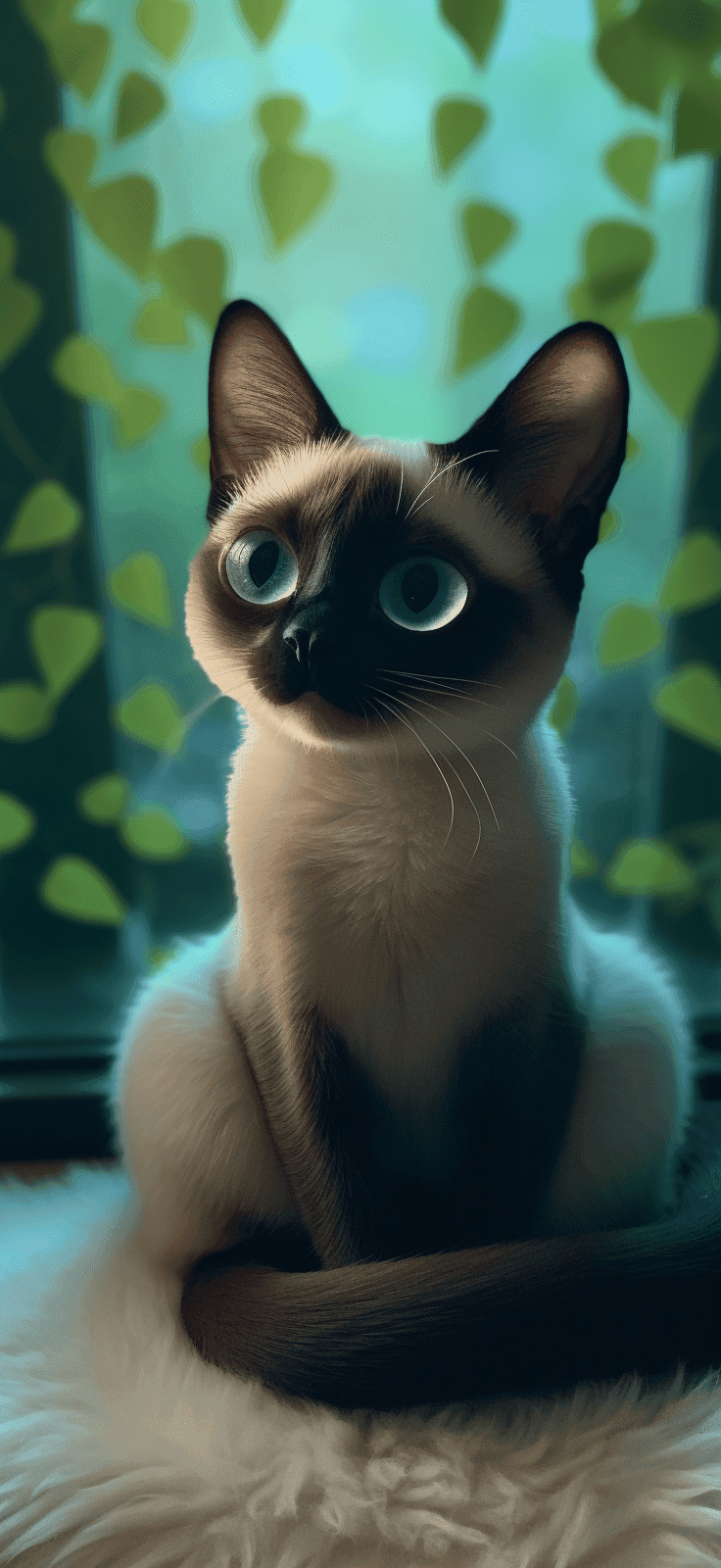
The Siamese cat is a slim, short-haired pointed breed from Thailand, the old kingdom of Siam. It has a pale body, darker "points" on the face, ears, legs and tail, and deep blue eyes. Siamese cats are famous for being talkative, clever and very attached to their people. Below you will find the real history behind the "royal cat of Siam" (and which parts are legend), why the points form where they do, the official colours, traditional versus modern type, personality, care, health and what to check when you buy a Siamese kitten in the UK.
In short
- Origin: Thailand (Siam). Pointed cats called Wichienmaat are described in the Thai Tamra Maew, the Cat-Book Poems, thought to date from the Ayutthaya period (1351 to 1767).
- In Britain since: the 1880s. The first well-documented pair, Pho and Mia, arrived in 1884.
- Coat: short, fine and close-lying, with a pale body and darker points.
- Classic colours: seal point, blue point, chocolate point and lilac point. The GCCF in the UK also recognises red, cream, tabby, tortie and several more point colours.
- Eyes: always blue, a side effect of the same gene that makes the points.
- Weight: commonly given as 6 to 10 lb (about 2.7 to 4.5 kg) for females and 9 to 14 lb (about 4 to 6.4 kg) for males.
- Lifespan: a life expectancy at birth of 11.7 years in UK vet records, the same as the average cat. Many live well into their teens.
- Temperament: vocal, sociable, curious and active. Not a cat for long days home alone.
- Grooming: low. A weekly brush is enough.
- Health points to ask about: progressive retinal atrophy (there is a DNA test), amyloidosis, asthma and some cancers.
Where do Siamese cats come from? A short history
Siamese cats come from Thailand, which was called Siam until 1939. Pale cats with dark points have lived there for centuries as a natural landrace, long before anyone bred them for shows.
The Tamra Maew, the Thai Cat-Book Poems
The oldest evidence is the Tamra Maew, a collection of illustrated manuscripts with verses about cats. It is thought to come from the Ayutthaya Kingdom (1351 to 1767), although the surviving copies are younger and nobody can date the original text exactly. That is where the often repeated "14th century" comes from. It is the earliest possible date, and nobody has been able to prove it. The poems describe a number of cats said to bring good fortune, among them the Wichienmaat, a pale cat with dark face, ears, feet and tail. That is the Siamese. The silver-blue Korat appears in the same manuscripts. Over a dozen copies are kept in the National Library of Thailand, and others are in the British Library and the National Library of Australia.
The "royal cat of Siam": what is true and what is legend
Siamese cats are often called the royal cats of Siam, and stories about them are everywhere. Here is how they hold up.
- "Only the royal family was allowed to own them." There is no evidence for this. Research has found no sign of a royal-only rule or an organised royal breeding programme. The cat poems were treasured manuscripts and pointed cats were clearly prized, which may be where the story started.
- "They were never given to foreigners." There is no evidence of a ban. From the 1880s Western diplomats brought pointed cats home from Bangkok, as you can read below.
- "The Burmese king took the cats as war booty." A Thai legend says that after the Burmese sacked Ayutthaya in 1767, King Hsinbyushin read the cat poem and had the cats rounded up and taken to Burma. It is a legend, and a nice one, but it is not documented history.
- "The kinked tail held the princess's rings" and "the cross-eyes come from guarding a treasure." These are folk tales. Many early cats from Thailand did have kinked tails and squints, and you still see kinks in Thai street cats today. Western breeders later bred both out, and the GCCF now treats them as serious faults.
The "royal" label is real in one sense: the name stuck in English and still sells the breed. "Royal cat" and "royal Siamese cat" are simply other names for the same Siamese breed. There is no separate royal variety.
How Siamese cats came to Britain
Cats described as Siamese were shown at the very first cat show at the Crystal Palace in London in 1871, although historians still argue about whether those were true Siamese. The first well-documented pair arrived in 1884. Edward Blencowe Gould, the British Consul-General in Bangkok, brought a breeding pair called Pho and Mia home as a gift for his sister Lilian. Their three kittens were shown at the Crystal Palace in 1885 but died soon after. Lilian went on to co-found the Siamese Cat Club in 1901. You will often read that the consul was called "Owen Gould", which appears to be a mistake that was copied from site to site.
From Britain the breed spread to the rest of Europe and to America, and it became one of the best known pedigree cats in the world. For the much longer story of how cats became pets in the first place, read our article on the history of the domestic cat.
Why are Siamese cats darker on the face, ears, paws and tail?
The colour pattern of the extremities of a Siamese cat is called pointing (or colourpoint). It is a form of temperature-sensitive partial albinism. The Siamese carries a mutation in the tyrosinase gene (TYR), the gene for the enzyme that makes pigment. In 2005 the geneticist Leslie Lyons and colleagues identified the exact change, a single letter swap in the gene that alters one amino acid. Geneticists call it the cs allele. A cat needs two copies to look Siamese.
The altered enzyme only works when it is cool. At normal body temperature it is largely switched off, so the warm trunk stays pale. On the cooler parts of the body, below roughly 33 °C, the enzyme works and the fur grows in dark. Those cooler parts are the ears, face mask, legs, feet and tail. That is the whole secret of the pattern.
The same mechanism explains a few things owners notice:
- Kittens are born white or cream. In the womb everything is warm, so there are no points yet. They start to show within the first weeks and develop over the following months.
- Siamese cats darken with age. Older cats usually have a darker body than young ones.
- Climate matters. Cats living in a warm climate tend to stay lighter than cats in a cool one.
- The blue eyes come from the same gene. Less pigment in the iris gives blue eyes. The gene also affects how the nerves from the eyes are wired to the brain, which is why early Siamese were often cross-eyed.
The same colourpoint gene is found in other breeds, such as the Birman, the Himalayan and the Ragdoll. The Burmese carries a different mutation in the same gene, which gives a dark cat with only slightly darker points.
Siamese colours: seal, blue, chocolate and lilac
Every Siamese has a pale body and darker points. What differs is the point colour. The four original colours are the ones most people think of when they picture a Siamese.
| Colour | Points | Body |
|---|---|---|
| Seal point | Deep seal brown, almost black | Pale fawn to cream, warmer towards the belly |
| Chocolate point | Milk chocolate, warm brown | Ivory |
| Blue point | Deep slate blue-grey | Bluish white, cooler in tone |
| Lilac point | Frosty grey with a pinkish tone | Glacial white |
Descriptions follow the CFA breed standard. Seal point is the original colour from Thailand. Chocolate is a lighter version of seal, blue is the diluted form of seal, and lilac is the diluted form of chocolate.
Which other colours count as Siamese depends on the registry:
- GCCF (UK): recognises around 32 colours and patterns as Siamese. On top of the four classics there are cinnamon, caramel, fawn, apricot, red and cream points, all of these as tabby points too, and tortie and tortie tabby points.
- CFA (US): only seal, chocolate, blue and lilac count as Siamese. Pointed cats of the same type in other colours, such as red or lynx point, are registered as a separate breed, the Colorpoint Shorthair.
- TICA: like the GCCF, accepts a wide range of point colours within the Siamese.
So a red point or tabby point Siamese is a Siamese in the UK, but a Colorpoint Shorthair in the American CFA. Same cat, different paperwork.
What a Siamese looks like: body, size and type
The GCCF standard describes a long, slim cat on fine legs with small oval feet and a long, tapering tail. The head is a long wedge narrowing to a fine muzzle, with large ears that continue the line of the wedge. The eyes are Oriental in shape, slanting towards the nose, and a deep, brilliant blue. The coat is short, fine and glossy, lying close to the body.
Siamese are medium-sized but feel light for their length. Breed guides commonly give 6 to 10 lb (about 2.7 to 4.5 kg) for females and 9 to 14 lb (about 4 to 6.4 kg) for males. They are fit and muscular under that sleek coat, and excellent jumpers and climbers. If you are comparing sizes with a heavyweight breed, our Maine Coon guide shows the other end of the scale.
Traditional, classic and modern Siamese
Not every Siamese looks the same, and you will come across three names.
Modern Siamese (show type)
From the 1950s and 1960s, breeders and show judges started to favour ever slimmer cats with longer heads. The result is the modern Siamese: a fine, tubular body, a long wedge-shaped head, very large ears and long legs. This is the type described in the GCCF and CFA standards, and the one you see at shows today. Some people call the most extreme examples "extreme" or "wedgie" Siamese.
Traditional Siamese (applehead and Thai)
The traditional or old-style Siamese looks more like the cats that first came from Thailand. It has a rounder head, a more solid, medium body and ears in proportion. In America the round-headed type was nicknamed "applehead", which started as a mocking term. By the mid-1980s the traditional type had largely vanished from the show ring, but some breeders, many of them in the UK, kept it going. Since then several registries have recognised the traditional type as a separate breed, the Thai. TICA and the World Cat Federation (WCF) accept it.
Classic Siamese
"Classic" is a pet-trade name for cats somewhere between the two: longer and slimmer than an applehead, but less extreme than a show cat. It is not an official breed or standard, so breeders use it in different ways. If a breeder offers a "classic" or "traditional" Siamese, ask which registry the kitten is registered with and as which breed.
You will read that traditional Siamese are calmer or friendlier than modern ones. There is no good evidence for personality differences between the types. Temperament depends far more on the individual cat, its parents and how the kittens were raised.
Siamese personality: what living with one is like
Siamese cats are among the most people-focused breeds there are. Owners describe them as dog-like: they follow you from room to room, want to be involved in whatever you are doing and often greet you at the door. They are clever, curious and active well into old age.
They talk. This is the trait everyone mentions. A Siamese has a loud, low, insistent voice that is often compared to a baby crying, and many will "answer" when you speak to them. Some are fairly quiet, but most are chatty, and a Siamese in season is very loud indeed. If you live in a flat with thin walls, take that into account. Why cats meow at us at all is explained in why do cats meow.
They do not like being alone. A Siamese left alone all day tends to get bored, noisy or destructive. Many owners and breeders advise keeping two cats if everyone is out at work. Another Siamese or another active, sociable cat is a good match.
They need things to do. Puzzle feeders, fishing-rod toys and climbing space keep them busy. Many Siamese learn to fetch or walk on a harness, and they are quick to learn how doors and cupboards open.
Children and other pets: an active, playful Siamese usually suits a lively household with children who know how to handle a cat gently. See our list of the best cat breeds for kids for how it compares with other breeds.
Allergies: the Siamese is often listed as hypoallergenic because of its short coat, but there is no research showing it makes less allergen than other cats. Read which cats are hypoallergenic before you rely on that.
Siamese cat habitat: indoors or outdoors?
Siamese cats have no wild habitat. They are a domestic breed, and their natural home is a human household, originally in the warm climate of Thailand. Today most pedigree Siamese in the UK live indoors or have access to a safe garden or catio. That suits them well, as long as you make up for it with play and climbing. Their short, single coat gives little protection in cold, wet weather, so an outdoor Siamese needs a warm, dry place to retreat to. Indoor life also protects an expensive, people-friendly cat from traffic and theft. Tips for a cat-safe outdoor space are in keeping cats in the garden.
Caring for a Siamese
Grooming
The short, fine coat needs very little work. A weekly once-over with a rubber grooming mitt or soft brush removes loose hair and gives the coat its shine, and most Siamese enjoy the attention. Our guide to the best cat brush for short hair covers which type works on a coat like this.
Check the claws every couple of weeks, especially if your cat lives indoors. How to do it calmly is explained in how to trim a cat's nails. Look in the ears now and then, and ask your vet before using any ear cleaner. Brushing your cat's teeth, or at least regular dental checks at the vet, is worth the effort in any breed.
Feeding
A Siamese does not need special food. A complete diet that suits its age and activity level is enough, wet, dry or a mix. Siamese are usually lean, active cats, but neutered indoor cats can still gain weight, and being too heavy or too light shortens a cat's life. Weigh your cat now and then and ask your vet what its ideal weight is. How to choose a good food is covered in our guide to feline nutrition. Make sure fresh water is always available.
Exercise and company
Plan two or three short play sessions a day, and give your Siamese places to climb and look out of the window. Rotating toys keeps them interesting. Company counts as care for this breed: a Siamese that gets enough attention and play is a much happier and quieter cat.
Siamese cat health
Siamese are generally healthy cats, but like every pedigree breed they have a few conditions that are more common than in the average moggy. The GCCF lists the following for the breed:
- Progressive retinal atrophy (PRA-rdAc): an inherited breakdown of the retina that slowly leads to blindness. A 2010 study by Menotti-Raymond and colleagues found the responsible mutation in about a third of the Siamese genes tested in North America and Europe. There is a DNA test, so ask for the parents' results. A cat needs two copies to be affected.
- Amyloidosis: abnormal protein deposits, in Siamese mainly in the liver, which can lead to liver failure or internal bleeding.
- Asthma: chronic coughing or wheezing is seen more often in Siamese and related breeds.
- Some cancers: including mediastinal (chest) lymphoma and intestinal tumours. In Swedish insurance data, tumours were the most common cause of death in Siamese and related breeds, mainly mammary tumours. Neutering a female early lowers the risk of mammary tumours in cats in general, so discuss timing with your vet.
- Pica and wool sucking: chewing or swallowing fabric and other non-food items. It can cause a blocked gut.
- Frequent vomiting and other digestive problems.
- Hip dysplasia and several rare inherited storage diseases, such as GM1 gangliosidosis.
When to see your vet: book an appointment if your Siamese bumps into things in dim light or seems unsure on stairs at night, coughs or wheezes, vomits regularly, loses weight, eats fabric or other non-food items, or if you feel a lump along the belly. Go straight to the vet, or an out-of-hours vet, if your cat breathes with its mouth open, has pale gums, collapses, or keeps trying to vomit without bringing anything up.
Lifespan: in a 2024 UK study of almost 8,000 cats from veterinary records (VetCompass, Teng and colleagues), Siamese had a life expectancy at birth of 11.7 years, the same as the average for all cats. That figure is pulled down by cats that die young. A healthy adult Siamese often reaches 15 or older. What affects lifespan in general is covered in how long do cats live.
Buying a Siamese kitten in the UK
If you have decided a Siamese is the cat for you, these checks help you find a healthy, well-socialised kitten.
- Choose a registered breeder. Breeders who register their kittens with the GCCF agree to its Code of Ethics. The GCCF website links to the Siamese breed clubs, which can point you to breeders with kittens.
- See the kitten with its mother, at home. In England it is illegal to buy a kitten under six months from a third-party seller such as a pet shop or dealer (Lucy's Law). Be wary of anyone who wants to meet in a car park or deliver the kitten to you.
- Vaccinated before it leaves. Under the GCCF Code of Ethics, kittens must be fully vaccinated against feline infectious enteritis and cat flu (FPV, FHV and FCV) before they go to a new home, with the course finished at least a week before. With two injections three weeks apart, that means kittens normally go home at around 12 to 13 weeks.
- Microchip. In England every pet cat must be microchipped and registered on a database by 20 weeks of age (since 10 June 2024).
- Ask about health tests. Ask for the parents' PRA-rdAc DNA results, and how old the cats in earlier generations lived to be.
- Ask which breed is on the paperwork. Siamese, Thai or Colorpoint Shorthair, and which registry.
- Rescue is an option. Adult Siamese and Siamese crosses regularly need new homes through breed rescues and general rescue centres. An adult has the advantage that you already know its character and how much it talks.
Bringing a kitten into a family with young children? Our guide to cats and children helps you prepare.
Breeds related to the Siamese
Several breeds descend from the Siamese or share its colourpoint gene. The Balinese is essentially a semi-longhaired Siamese. The Oriental Shorthair has the same body and personality, but in solid and patterned colours without points, and usually green eyes. The Thai is the traditional type recognised as its own breed. The Tonkinese is a Siamese and Burmese cross with aqua eyes. The Birman, Himalayan and Ragdoll are pointed too, but they are different breeds with a longer coat and generally a calmer character.
Famous Siamese cats
Si and Am from Lady and the Tramp
The most famous cartoon Siamese are Si and Am, the two scheming cats in Disney's Lady and the Tramp (1955). Their number, "The Siamese Cat Song", is the one many people still remember by its opening line. Peggy Lee voiced both cats and co-wrote the songs. The characters made the breed known to millions, but the scene is now widely criticised for its stereotyped portrayal of East Asian people.
Koko from The Cat Who books
In Lilian Jackson Braun's mystery series The Cat Who..., starting in 1966, the journalist Jim Qwilleran solves crimes with the help of his Siamese tomcat Koko, full name Kao K'o-Kung, and later a Siamese female called Yum Yum. Koko's talent for "finding" clues did a lot for the breed's reputation for intelligence.
Wong Mau, the mother of the Burmese
Wong Mau was a small brown cat that Joseph Cheesman Thompson brought from Burma (now Myanmar) to San Francisco in 1930. She was bred with Tai Mau, a seal point Siamese, and later with her own son. Their dark brown kittens founded the Burmese breed, and most Burmese today descend from her. Later research showed that Wong Mau herself was a cross between Siamese and Burmese types, and her early crossbred line was later developed into the Tonkinese. Older articles, including an earlier version of this one, say she came from Siam and was mated with a black tomcat. Both are wrong.
Frequently asked questions
Why are Siamese cats called royal cats?
Because of the story that only the Thai royal family was allowed to keep them. There is no evidence of a royal-only rule or a royal breeding programme. "Royal cat of Siam" is simply a nickname for the Siamese, and there is no separate royal breed.
What is the colour pattern of the extremities of a Siamese cat called?
It is called pointing or colourpoint. It is caused by a temperature-sensitive mutation in the tyrosinase gene, a form of partial albinism. The pigment enzyme only works in the cooler parts of the body, so the ears, face, legs, feet and tail are dark while the warm body stays pale.
What is a Siam cat?
"Siam cat" is simply another name for the Siamese cat, after Siam, the old name of Thailand. In Thailand the traditional pointed cat is called the Wichienmaat.
What are the four Siamese colours?
Seal point, chocolate point, blue point and lilac point. These are the only Siamese colours in the American CFA. The GCCF in the UK and TICA also accept red, cream, tabby, tortie and several other point colours as Siamese.
Are Siamese kittens born white?
Yes, they are born white or cream because everything is warm in the womb. The points start to colour in during the first weeks and keep developing for months. Siamese also tend to darken as they get older.
How long do Siamese cats live?
UK vet records give Siamese a life expectancy at birth of 11.7 years, the same as the average cat. Many healthy Siamese live to 15 or beyond. Ask the breeder how old earlier generations lived to be.
Are Siamese cats very loud?
Most are. Siamese are one of the most vocal breeds, with a loud, low voice, and they like to "talk back". Unneutered females in season are especially loud.
Can a Siamese cat be left alone?
For a few hours, yes, but a Siamese that is alone all day often gets bored and noisy. If you are out at work, consider two cats and plenty of toys.
What is the difference between a traditional and a modern Siamese?
The traditional or applehead type has a rounder head and sturdier body, like the early cats from Thailand. The modern show Siamese is much slimmer with a long wedge-shaped head and large ears. Some registries recognise the traditional type as a separate breed, the Thai.