How to Travel With a Cat by Car: Calm, Safe Tips for Short and Long Trips
In this article
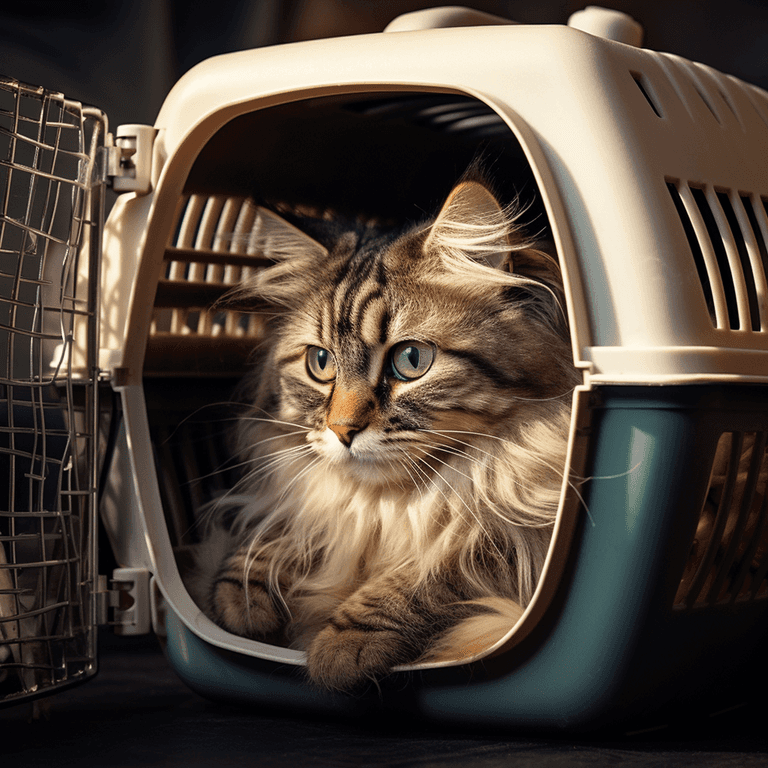
The safest way to travel with a cat by car is in a sturdy, well-ventilated carrier that is strapped in with a seat belt on the back seat, with the cat shut inside for the whole drive. Get your cat used to the carrier and to short drives a week or more before the trip, skip the meal for a few hours before you leave, stop every two to four hours on a long journey, and never leave your cat alone in a parked car. Most cats meow for the first part of the drive and then settle.
This article contains affiliate links How it works
Katdootje earns a small commission if you buy through a link in this article. It costs you nothing extra and does not influence what we recommend. As an Amazon Associate, Katdootje earns from qualifying purchases.
In short
- Carrier, always: a hard plastic carrier big enough for your cat to stand up and turn around, belted onto the back seat or wedged in the footwell behind a front seat. Never loose in the car, never in the boot.
- Practise first: leave the carrier out at home for days, feed treats in it, then build up from sitting in the parked car to short drives.
- On the day: no food for a few hours before you leave, water available, a familiar blanket inside and a towel over part of the carrier.
- Long distance: a break every two to four hours, a litter tray offered next to the carrier with the car doors and windows shut, and never leave your cat in a warm car.
- Very anxious cat: a pheromone spray in the carrier can help some cats. Calming medication such as gabapentin is only available from your vet.
Is it cruel to travel with a cat in a car?
No, not when you prepare well and the trip is necessary. Moving house, a long stay away, a vet visit or a new home for a rescue cat are all good reasons, and most cats cope fine in a secure carrier. Cats are territorial animals, though, and International Cat Care points out that most feel vulnerable away from home. Only a few really enjoy travelling.
That is why both the RSPCA and Cats Protection advise against taking a cat on a normal holiday unless it is already used to travel. For a week away, a cat sitter or a good cattery is often the kinder option. If you are moving, have a long stay elsewhere or simply cannot leave your cat, this guide covers everything from the first practice drive to the first night at your destination.
Preparing for the trip
Good preparation does more for a calm journey than anything you buy. Start at least a week ahead, longer for a nervous cat.
Get a suitable carrier
Cats Protection, International Cat Care and the RSPCA agree on the basics. Choose a carrier that is:
- Sturdy and easy to clean. Hard plastic or plastic with a metal wire door works best. Cardboard carriers get wet and are not strong enough, and a cat can push its way out.
- Big enough. Your cat should be able to stand up, turn around and lie down comfortably, but not slide from wall to wall when you brake. For a big breed such as a Maine Coon, that means a large size.
- Top-opening, ideally. A carrier that opens at the top, or whose whole top half lifts off, lets you lower your cat in and lift it out without tipping it up or dragging it through a door.
- Handheld. Cats Protection does not recommend backpack carriers. Most are too small for a cat to stand or turn, and the swaying of your walk unsettles them.
What about a crash-tested carrier? Very few cat carriers have been tested in a crash. The US non-profit Center for Pet Safety certifies a small number of carriers (Sleepypod is the best-known brand on its list), but they are expensive and hard to find in the UK. A strong hard carrier that is properly belted in is what UK cat charities recommend for everyday use.
What owners say: with more than 64,000 ratings this is one of the most reviewed carriers on Amazon, and the same things come back again and again. Owners call it sturdy and good value, praise the metal front gate, and say the top door makes vet trips much easier with a cat that refuses to walk in. An owner of 7 kg cats says the 58 cm size fits them well, and another advises anyone with an adult cat to pick this bigger size over the 48 cm version. The recurring complaint is the screws: several people find them fiddly or hard to line up, especially with long nails.
Get your cat used to the carrier
Most cats only ever see the carrier on the way to the vet, so they learn to hate it. Turn that around:
- Leave the carrier open in a room where your cat likes to relax, a few days or more before the trip.
- Put a blanket or bed inside that smells of home, and drop in treats or the occasional meal. A tasty cat treat your cat only gets in the carrier works well.
- Let your cat go in and out and even sleep in it. Only close the door for a few seconds once your cat is relaxed inside, then for longer.
- Practise picking up the closed carrier, carrying it around the house and putting it down again, with a treat afterwards.
Cats Protection warns not to rush the step where you close the door. A cat that gets a fright now will remember it on the day.
Get your cat used to the car
Once the carrier is a safe place, add the car in small steps. Put your cat in the carrier in the parked car for a few minutes with the doors shut. Next time, start the engine without moving. Then drive around the block, and build up to short trips of ten or twenty minutes that end with a treat at home. If you can, avoid ending every practice drive at the vet.
Expect some meowing. Cats Protection calls it a sign of stress, but the motion and steady noise of the car often calm a cat once it has been going for a while. Talk to your cat in a quiet voice and keep the radio low.
Make sure your cat is healthy and identifiable
Book a check with your vet before a long road trip, especially for an older cat or a cat with a health condition. That is also the moment to talk about travel sickness or severe anxiety (see the calming section below) and to make sure vaccinations and parasite treatment are up to date, particularly if you are heading somewhere with ticks.
Check the microchip. In England, cats must by law be microchipped and registered by 20 weeks old, and the details on the database must be kept up to date. If you are moving house, update the address before you go. A microchip does not tell you where your cat is, though. If your cat goes outdoors at your destination, a GPS tracker for cats can help you find it if it bolts in unfamiliar surroundings.
Cat road trip essentials
For a short drive the carrier and a blanket are enough. For a long road trip, Cats Protection and the RSPCA suggest packing:
- The carrier, lined with an absorbent puppy pad and familiar bedding
- A spare blanket or towel, to swap if your cat is sick or wets the bedding
- A small litter tray with the litter your cat uses at home, plus poo bags
- Bottled water, food and bowls (a bowl that clips onto the carrier door lets you top up water without opening it)
- Pet-safe wipes or disinfectant and kitchen roll
- A harness and lead, only if your cat is already trained to wear one
- Any medication, your vet's phone number and a copy of the vaccination record
- A familiar toy and a towel to drape over the carrier
The day of the trip
Feed your cat early
Travel sickness is less likely on an empty stomach. Unless your vet advises otherwise, give the last meal a few hours before you set off. International Cat Care suggests about four to five hours and the RSPCA about two. Water can stay available right up to departure. For a kitten, a diabetic cat or a cat on medication, ask your vet what to do.
Get your cat into the carrier calmly
Shut your cat in the room with the carrier well before you need to leave, so you are not chasing it around the house at the last minute. With a top-opening carrier, gently lower your cat in from above. If you use a pheromone spray, spray the bedding 15 to 20 minutes beforehand so the spray has dried before your cat goes in.
Secure the carrier in the car
Rule 57 of the UK Highway Code says animals in a vehicle must be suitably restrained so they cannot distract you while driving or injure you, or themselves, if you stop quickly. A pet carrier is one of the ways it names.
In practice:
- Back seat, belted in. Cats Protection recommends putting the carrier on a back seat and fastening the seat belt around or through it. International Cat Care adds the footwell behind a front seat as a safe place, as long as the carrier is wedged so it cannot slide.
- Never in the boot. International Cat Care is clear on this. There is less air, more heat and nobody can see the cat.
- Not on the front seat with an airbag, and not on someone's lap.
- Never loose in the car. A cat roaming the car can end up under the pedals or escape through a door the moment it opens. Keep it in the carrier for the whole journey, even if it cries.
- Air but no draught. Make sure the car is well ventilated, but do not aim the heating or air conditioning straight at the carrier.
Use calming techniques
Most of the calming happens before the trip, through carrier and car training. On the day, these help:
- Cover part of the carrier with a towel or blanket that smells of home. Many cats feel safer when they cannot see the world rushing past. Leave enough open for air.
- Drive smoothly and keep the music and talking low.
- Pheromone spray. International Cat Care and Cats Protection both mention synthetic feline pheromone sprays as something that may reduce anxiety in the carrier. They do not work for every cat.
What owners say: the reviews are honest about the hit and miss. One owner sprayed a new carrier for an elderly cat that hated travelling, left it open in the lounge, and found the cat checking it out soon after. Another says their cat was still anxious on a two-hour drive but calmed down enough to knead the blanket. Just as many write that it made no difference at all. The recurring complaints are the price for such a small bottle and a nozzle that can take a while to start spraying.
Calming medication: only through your vet
If your cat has been very distressed or sick on earlier journeys, ask your vet about medication. Do not give your cat anything from your own medicine cabinet. Many human medicines are dangerous to cats.
The medicine vets most often discuss for travel and vet visits is gabapentin. A small study by van Haaften and colleagues (JAVMA, 2017) gave 20 cats that were known to be stressed at the vet a single dose of gabapentin or a placebo before a visit. With gabapentin the cats were calmer both in the car and during the examination. Sleepiness was the main side effect, and some cats were wobbly or drooled. It is a prescription medicine, so your vet decides whether it suits your cat, how much and when to give it, and may suggest a trial dose at home before the journey. Follow your vet's instructions exactly.
Take breaks and offer water
Cats Protection suggests keeping total travel time to about four hours a day where you can, and taking a break every two to four hours on a longer journey. At each stop:
- Check your cat: is it breathing calmly, not too hot, not sitting in a wet bed?
- Offer a little water. A light snack is fine at a break, the RSPCA says, but keep it small.
- If your cat seems to need the toilet, put the litter tray next to the carrier and open the carrier only with all doors and windows closed and locked. A frightened cat at motorway services can be gone in a second.
- Do not keep taking your cat in and out of the carrier. Many cats will not use a tray in a strange place anyway, and that is normal on a drive of a few hours.
Never leave your cat in a hot car
A parked car heats up very fast, even on a mild sunny day. The RSPCA warns that a pet left in a car on a warm or hot day can suffer distress, injury or death, and International Cat Care points out that heatstroke can be fatal. Parking in the shade with the windows open is not enough. If you need to stop for food, eat next to the car or take turns, with someone staying with the cat and the doors open for air. On hot days, travel early in the morning or in the evening.
Signs your cat is too hot or very stressed include panting with an open mouth, heavy drooling and restlessness. Stop somewhere safe, get cool air moving and call a vet if your cat does not recover quickly.
Travelling with cats in a car long distance
A long road trip is the same routine, repeated. A few extra points for journeys of a day or more:
- Plan the route around your cat. Choose quiet places to stop, and know where there are vets along the way and at your destination.
- Book cat-friendly accommodation in advance if you stop overnight, and check it really accepts cats. In the room, look for gaps behind furniture and under beds where a cat could hide or get stuck, and only then open the carrier. Set up food, water and the litter tray, and hang the "do not disturb" sign so cleaners do not open the door.
- Use a large crate only with a carrier as well. International Cat Care notes that some owners use a bigger crate with a litter tray for long drives, but you still need a small carrier to move your cat safely in and out of the car.
- Keep the routine. Feeding in the evening, at the overnight stop, works better than feeding just before you drive.
Travelling abroad with your cat by car
The rules depend on where you live and where you are going, and for Great Britain they have changed since Brexit. Always check the official source a few weeks before you travel:
- From Great Britain to the EU or Northern Ireland: according to GOV.UK, your cat needs a microchip, a rabies vaccination given at least 21 days before travel (the cat must be at least 12 weeks old for the vaccination) and an animal health certificate from your vet for each trip. A pet passport issued in Great Britain can no longer be used. The certificate is valid for 10 days for entry into the EU.
- Within the EU: an EU pet passport with a valid rabies vaccination and microchip is the standard. See Your Europe for the current rules.
- United States and elsewhere: check the USDA APHIS pet travel pages and the rules of the country you are visiting, as some countries or states have their own requirements.
Plan this early. The wait after a first rabies vaccination alone is three weeks, and vets need time to issue certificates.
Arriving at your destination
Introduce your cat to the new environment
Carry the carrier into one quiet room that you have prepared in advance, with the windows shut: litter tray, water, a little food, the familiar bedding and somewhere to hide. Close the door, then open the carrier and let your cat come out in its own time. Do not pull it out. International Cat Care says your cat may not eat until it has settled, and that is normal for the first hours.
Once your cat is eating, using the tray and exploring the room, open up the rest of the house a room at a time. If you use a pheromone diffuser at home, plugging one in at the destination can help too.
Keep your cat indoors
A cat in a new place does not know the way home and may try to find its old territory. After a move, International Cat Care recommends keeping your cat indoors for at least two to three weeks. On a holiday or short stay, keep your cat inside the whole time, and be careful with doors, windows and balconies. When you are ready to let it out after a move, see our tips on keeping cats in the garden.
Monitor your cat's behaviour
Hiding, a smaller appetite and a few extra meows are normal for a day or two. Call a vet if your cat does not eat for more than a day, keeps vomiting, has diarrhoea, has not passed urine or is straining in the litter tray. A cat that has not peed in 24 hours, or is straining without result, needs a vet that same day.
Provide familiar items
Bedding, a favourite toy, the usual food bowl and the same litter all smell of home. Do not wash the blanket from the carrier straight away. The familiar smells help your cat feel that this strange place is safe.
Frequently asked questions
Can a cat be loose in the car?
No. A loose cat can get under the pedals, distract you or escape when a door opens, and the Highway Code (rule 57) says animals must be suitably restrained in a vehicle. Keep your cat shut in a secured carrier for the whole journey.
How do I keep my cat calm in the car?
Train your cat to the carrier and to short drives in the weeks before. On the day, use familiar bedding, cover part of the carrier with a towel, drive smoothly and keep noise low. A pheromone spray helps some cats. If your cat is very anxious, ask your vet about medication.
How long can a cat travel in a car?
Cats Protection suggests no more than about four hours a day where possible, with a break every two to four hours. Longer trips are possible with good preparation and overnight stops, but they are harder on your cat.
Should I put a litter tray in the carrier?
Not in a normal carrier, there is no room. Line the carrier with an absorbent pad and offer a small litter tray next to the carrier at breaks, with all doors and windows shut. Many cats will not use it during a journey of a few hours, which is normal.
Should I feed my cat before a long car journey?
Not right before. Give the last meal a few hours before you leave to reduce the risk of travel sickness, and keep water available. Check with your vet first for kittens, diabetic cats or cats on medication.
What should I do if my cat gets car sick?
Signs include drooling, panting, vomiting and lots of meowing. Stop somewhere safe, clean up and check your cat. Before the next trip, practise short drives, skip food beforehand and ask your vet, who can check for health problems and prescribe medication against sickness or anxiety if needed.
What if my cat refuses to go in the carrier?
Leave the carrier out at home with bedding and treats inside so your cat goes in by itself. A top-opening carrier makes it easier to lower a reluctant cat in. In an emergency you can wrap your cat loosely in a towel and lower it in, but carrier training works better in the long run.