Why Does My Cat Lick Me? 6 Reasons and When to Worry
In this article
- Why does my cat lick me? Six common reasons
- Why does my cat lick me so much?
- Why is my cat licking me all of a sudden?
- When licking is a warning sign
- Why does my cat lick me and then bite me?
- Why does a cat's tongue feel so rough?
- Is it safe to let my cat lick me?
- My cat doesn't lick me. Does it not love me?
- How to stop your cat licking you, kindly
- Frequently asked questions
In short
- Most often: your cat is grooming you the way it would groom a cat it trusts. Vets and behaviourists call this allogrooming, and it is a sign of a close bond.
- Also common: sharing scent, asking for attention, and the taste of salt, food or lotion on your skin.
- Worth a closer look: licking that suddenly starts or stops, licking you can barely interrupt, or a cat that also over-grooms itself. Stress and itchy skin are the usual causes, so start with your vet.
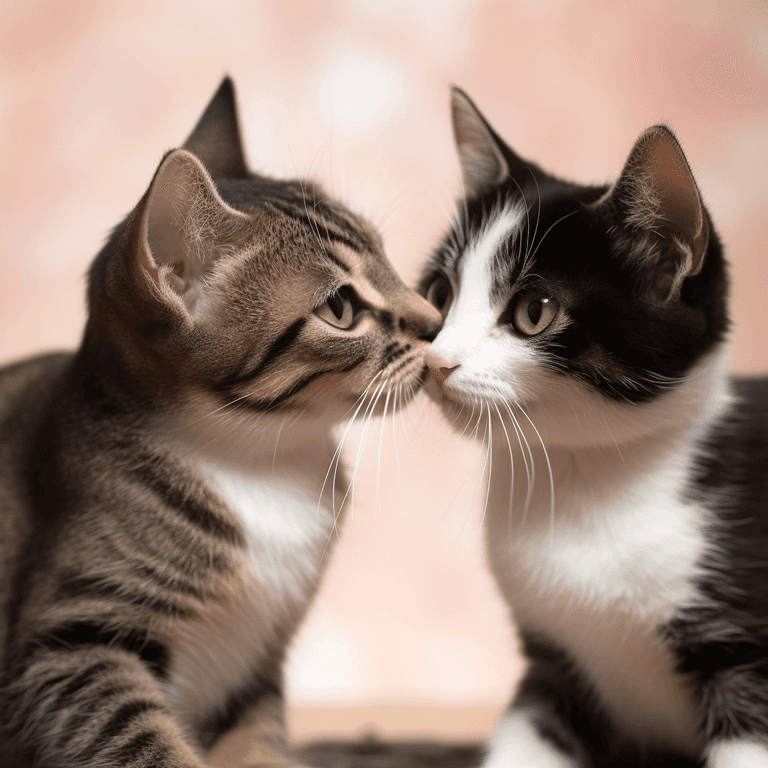
When your cat licks you, it is usually treating you as one of its own. Cats that like each other groom each other, especially around the head and neck, and a cat that licks your hand or hair is doing the same thing to you. It feels good to the cat, it mixes your scent with its own, and it often comes with a request for attention.
Below you will find each reason in more detail, why some cats lick so much or start out of nowhere, when it is a sign that something is wrong, and how to stop it without upsetting your cat.
Why does my cat lick me? Six common reasons
1. It is grooming you as part of its group
Two cats grooming each other is called allogrooming. International Cat Care describes it as one of the ways cats communicate by touch, alongside rubbing against each other and resting together, and notes that grooming helps cats keep strong social bonds. Cats only do this with cats they are relaxed around. So a cat that grooms your hand, arm or hair is paying you a compliment. It also echoes kittenhood, when the mother cat licked her kittens clean.
This is why the question "why is my cat grooming me" has the same answer as "why does my cat lick me". Licking is grooming, and a cat that grooms you sees you as safe.
2. It is sharing scent
Cats recognise friends largely by smell. When cats rub and groom each other, they swap scent, which helps them identify who belongs. Licking you adds your cat's scent to your skin and picks up yours in return. Cats Protection's behaviourists describe this as marking you as part of the cat's group.
3. It wants your attention
Cats learn fast. If a lick on the hand gets you to stroke, talk or reach for the treat tin, your cat will try it again. Many owners notice that the licking happens at the same moments every day: first thing in the morning, when they sit down on the sofa, or just before dinner.
4. You taste interesting
Skin tastes of salt after exercise or a warm day. Hands carry traces of whatever you just cooked or ate. Moisturiser, sun cream and some soaps also have a smell or taste that draws cats in. If your cat makes a beeline for your hands after you have handled chicken or tuna, this is probably the reason. Some of these products are not good for cats to swallow, which is covered in the safety section below.
5. It feels good
According to Cats Protection, grooming releases endorphins, which helps a cat feel calm. Licking you can be part of a relaxed moment for your cat, which is why it often happens while it is lying on your lap, purring or kneading. You can read more about those two signals in why cats purr and why cats knead.
6. It is stressed or anxious
Because grooming is soothing, some cats lick more when they feel uneasy. That can be licking themselves, licking you, or licking objects such as blankets. Stress licking tends to look different from friendly grooming: it is more repetitive, harder to interrupt, and often appears after a change at home.
Why does my cat lick me so much?
Some cats are simply more sociable groomers than others, and a cat that lives without another cat may direct all of that grooming at you. A lot of licking is usually fine when your cat is relaxed, eating, playing and using the litter tray as normal, and when you can easily distract it.
It is worth looking at the pattern. Ask yourself:
- When does it happen? Always when you sit down or wake up points to attention and routine.
- Where on your body? Hands and arms after cooking, gardening or putting on cream points to taste.
- Can you redirect it? A cat that happily switches to a toy or a brushing session is grooming for social reasons. A cat that keeps going back to the same spot, almost on autopilot, may be licking out of stress.
- Is your cat also licking itself more? Then read the warning signs below.
Why is my cat licking me all of a sudden?
A cat that starts licking you out of nowhere has usually noticed something new or is reacting to a change. The most common triggers:
- Something on your skin. A new hand cream, body lotion, sun cream, medicated gel or even a new washing powder on your clothes.
- A change in routine or household. PDSA vets list moving house, building work, a new baby or a new pet as typical stress triggers. Changes in when you are at home can also make a cat seek more contact.
- Tension with another cat. Competition for food, resting places, litter trays or attention, inside the house or through the window, can make a cat more clingy.
- Feeling unwell. Any sudden change in behaviour can be an early sign that your cat is not feeling right. If the new licking comes with other changes, such as eating less, hiding or grooming itself more, book a check with your vet.
When licking is a warning sign
Friendly licking needs no action at all. Contact your vet if you notice any of the following:
- Your cat is also over-grooming itself. Thinning fur, bald patches (often first on the belly), scabs or sore skin. PDSA vets advise calling your vet first, because fleas, mites and allergies are common causes of itchy skin that lead to excess grooming.
- Compulsive licking. Licking that goes on and on, that your cat stops eating or playing for, or that you cannot interrupt. Once medical causes have been ruled out, your vet may refer you to a qualified behaviourist.
- A sudden change. A cat that suddenly starts licking a lot, or a cat that always groomed you and suddenly stops, along with other changes in behaviour, appetite or litter tray habits.
- Licking a particular spot on itself. Cats sometimes lick an area that hurts, such as a sore joint, paw or belly.
If your cat has bald patches or broken skin, do not wait for it to pass. Your vet can look for parasites, allergies and pain, and only once those are ruled out does stress become the working explanation. Keeping a short diary of when the licking happens helps both your vet and a behaviourist.
Why does my cat lick me and then bite me?
This is very common, and in most cases it is not aggression. Cats grooming each other often include small nibbles, especially when working through a knot in the fur, so a gentle nip in the middle of a licking session is part of the same behaviour.
A harder bite usually means your cat has had enough. Cats Protection describes this as overstimulation: the cat was enjoying the contact, then it became too much. Watch for ears turning sideways or back, a twitching or swishing tail, skin rippling along the back, or a cat that stops purring. When you see those signs, stop stroking and let your cat move away. Play can also tip from licking into biting, so keep a toy within reach to redirect the bite.
For the full picture, including love bites, play biting and what to do if a bite breaks the skin, see why does my cat bite me.
Why does a cat's tongue feel so rough?
A cat's tongue is covered in hundreds of small, stiff spines called papillae. They are made of keratin, the same material as claws and fingernails, and they face backwards towards the throat. That is the sandpaper feeling on your skin.
A 2018 study by Alexis Noel and David Hu at Georgia Tech, published in the scientific journal PNAS, looked at these spines under a micro-CT scanner. They found that each papilla is curved and scoop-shaped with a hollow tip that holds saliva. When a cat grooms, the spines reach through the fur down to the skin and deposit saliva there. That cleans the coat and, as the saliva evaporates, helps the cat cool down. The same spines catch loose hair, which is why cats swallow fur and sometimes bring up hairballs.
On a cat this works beautifully. On bare human skin, repeated licking on the same spot can leave it red and sore, which is often the moment owners start looking for a way to stop it. More about cat tongues, including the famous "blep", is in why do cats stick their tongues out.
Is it safe to let my cat lick me?
For most healthy people, a lick on the hand or arm is harmless. Two things are worth knowing.
Hygiene
Cat saliva naturally contains bacteria. The US Centers for Disease Control and Prevention (CDC) notes that Capnocytophaga bacteria live in the mouths of healthy cats and dogs and can spread through bites or close contact, although most contact does not cause infection. Sensible habits:
- Do not let your cat lick cuts, scratches, grazes or broken skin.
- Keep licks away from your eyes, nose and mouth.
- Wash your hands after a long licking session, and always before eating.
- If you have a weakened immune system (for example during chemotherapy, without a spleen, or with HIV), ask your doctor how to handle close contact with pets.
Creams, lotions and medication on your skin
This is the bigger risk, for your cat. Anything on your skin can end up in your cat's stomach. Cats Protection warns that scented moisturisers, medicated creams and sun creams can contain ingredients that are harmful to cats. In 2015 the US Food and Drug Administration (FDA) warned owners after cats in two households fell seriously ill with kidney failure, and several died, after their owners used pain-relief creams containing the anti-inflammatory drug flurbiprofen on their own skin. The FDA stressed that even very small amounts can be dangerous to pets.
If you use any medicated cream, gel, patch or spray on your skin, keep your cat away from that area until it has fully absorbed or is covered, and ask your pharmacist or vet whether the product is risky for cats. If your cat has licked a medicated product and seems unwell (vomiting, drooling, not eating, lethargy), call your vet straight away and take the packaging with you.
My cat doesn't lick me. Does it not love me?
A cat that never licks you is perfectly normal. Not every cat grooms other cats either, and many affectionate cats show their attachment in other ways: following you from room to room, slow-blinking at you, rubbing their head against your legs or hand, sleeping near you, purring on your lap or greeting you at the door with the tail up. A cat that does all of that is bonded to you, licking or not.
The only time a lack of licking matters is when it is a change. If a cat that always groomed you stops, and also seems quieter, eats less or hides, that is a reason to check in with your vet.
How to stop your cat licking you, kindly
If the licking is too much, or your skin is getting sore, you can reduce it without damaging your relationship. Cats Protection is clear that pushing your cat away or punishing it can cause behavioural problems, so keep everything calm and low-key.
- Calmly move away. When the licking starts, gently take your hand back, stand up or shift position without talking to or stroking your cat. If licking no longer brings attention, a cat that licks for attention will do it less.
- Offer something better. Swap your hand for a wand toy, a puzzle feeder or a short brushing session. Many cats love being brushed, and it gives them the social grooming they are looking for. If you need a brush, our guide to the best cat brush for short-haired cats helps you choose one.
- Give attention before your cat asks. A few short play sessions and a predictable routine each day mean your cat has less reason to ask for attention by licking.
- Cover up. Long sleeves or a blanket over your lap stop the licking on sore skin while your cat can still sit with you.
- Wash off food and creams. Clean hands after cooking, and keep your cat away from fresh lotion or medicated products.
- Reduce stress. If the licking started after a change at home, give your cat a quiet place of its own and enough food bowls, water, litter trays and resting places. PDSA advises one of each per cat plus one extra in multi-cat homes.
- Get help if it does not settle. If the licking is compulsive or your cat is also over-grooming itself, see your vet first and then, if needed, a qualified behaviourist.
Curious why cats groom each other in the first place? Read why do cats lick each other.
Frequently asked questions
Does my cat love me if it licks me?
In most cases, yes. Cats only groom individuals they trust and feel relaxed with, so a cat that licks you is treating you as part of its group. It is one of the clearest signs of a close bond a cat can give.
Why does my cat groom my hair?
Head and neck grooming is typical between cats that are close, so your hair is the natural place for your cat to groom you. Shampoo, conditioner and styling products can also smell or taste interesting. If your cat chews or swallows hair, gently move it away, because hair and product residue are not good for its stomach.
Why does my cat lick me when I stroke it?
Your cat is returning the favour. Stroking feels like grooming to a cat, and licking you back is the social reply. If the licking turns into biting, your cat may be getting overstimulated, so pause and let it decide whether it wants more.
Why does my cat lick me at night or in the morning?
Usually to get your attention, often because it is hungry or wants to play. If you respond by getting up or feeding, the licking quickly becomes a habit. Calmly ignoring it and feeding at fixed times usually helps.
Is it bad if my cat licks my face?
It is a friendly gesture, but it is best to keep licks away from your eyes, nose and mouth, and from any broken skin, because cat saliva carries bacteria. Turning your face away and offering your hand or a toy is enough.
Should I worry if my cat licks me too much?
Not if your cat is otherwise relaxed and healthy and you can easily distract it. See your vet if the licking is compulsive, started suddenly along with other changes, or if your cat is also over-grooming itself and losing fur.